





As early childhood teachers, we know how important it is for our students to build strong hands and fingers before diving into handwriting. But during those first few weeks of school, it’s not always easy to fit in fine motor skills practice alongside everything else!
Fortunately, you don’t need a complicated setup or fancy supplies to help your students build the muscles they need for cutting, writing, buttoning, and more. With a little planning (and some play!), you can easily weave fine motor skills into your daily routine.
Here are 10 easy and effective ways to build fine motor strength in your preschool, pre-k, or kindergarten classroom right from the start!
1. Use Playdough to Strengthen Hands and Wrists
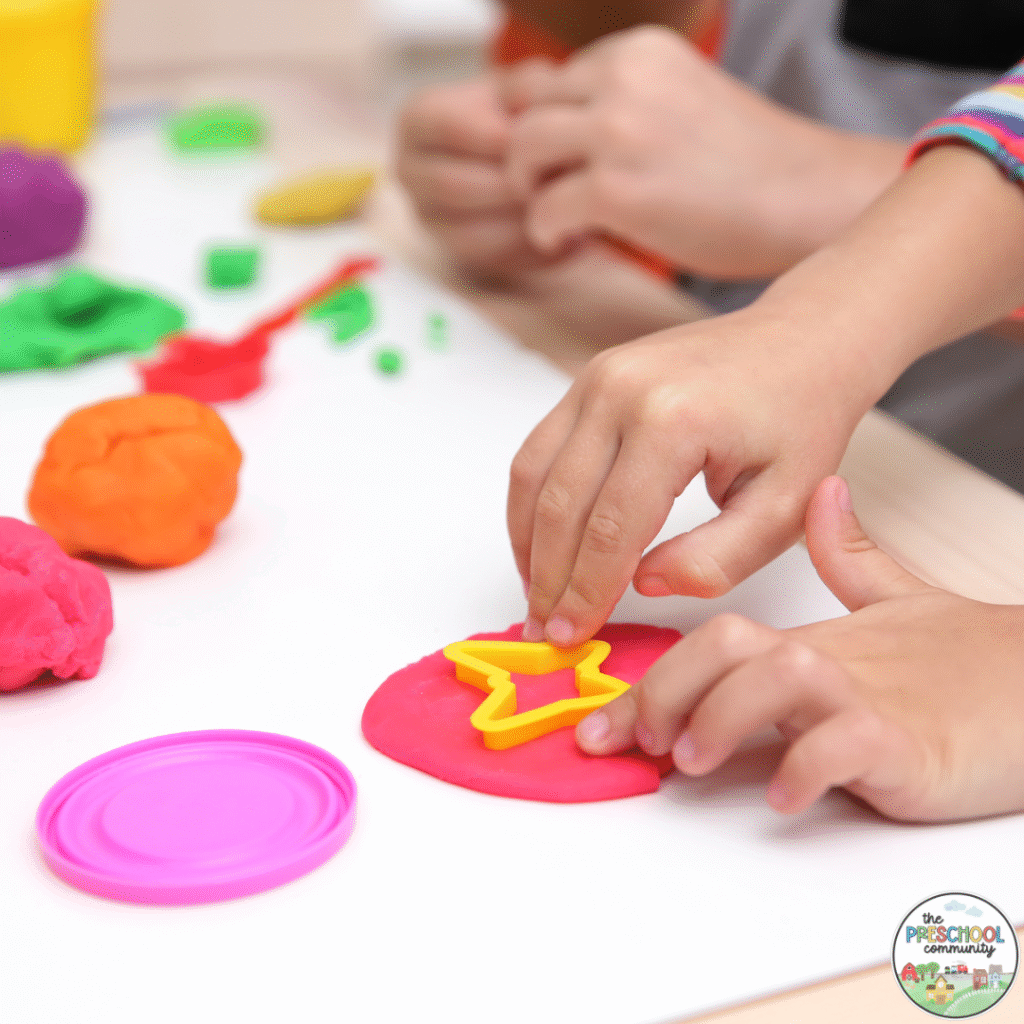
Playdough is one of the best tools for fine motor development because it builds strength through squishing, pinching, rolling, and pressing, all movements that help prepare little hands for writing.
Not to mention, kids love it!
How to Use It:
Set up a playdough invitation during morning tubs or center time with tools like rolling pins, scissors, plastic stamps, and cookie cutters.
In my classroom, I love to use different colored playdough to match the time of year as well. For example, in September I make a big batch of red playdough. You can also add fun seasonal props like mini plastic toys, figurines, or anything else that brings a bit of fun to the center.
Encourage students to roll the dough, cut out shapes, form snakes, and make creations. This feels like play to your students, but is a wonderful way to encourage fine motor skills.
This activity is fantastic for the afternoon when students (and teachers!) are feeling a little restless. Turn on some calming music and watch as it relaxes the environment of your classroom.
2. Incorporate Tracing Practice into Your Daily Routine
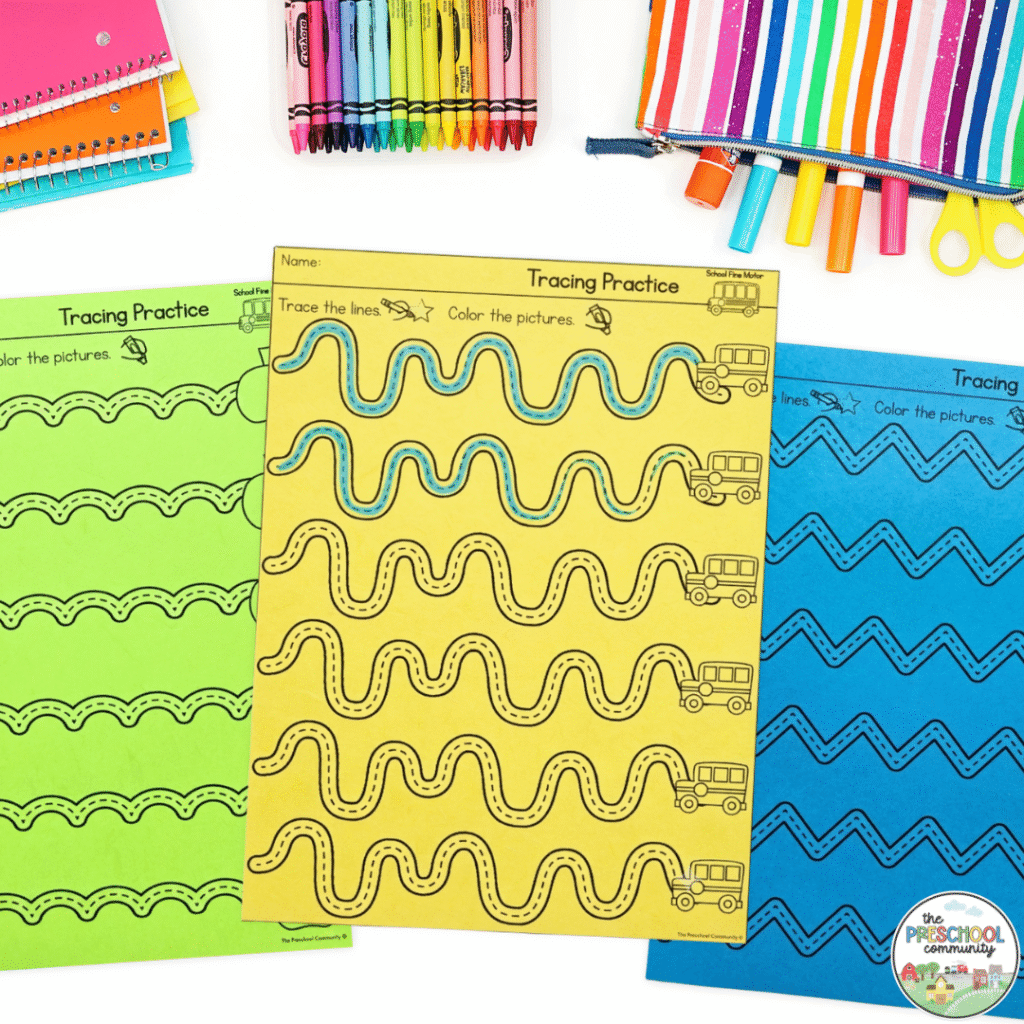
Tracing helps students develop control, visual-motor coordination, and muscle memory, skills that are essential for learning to write.
How to Use It:
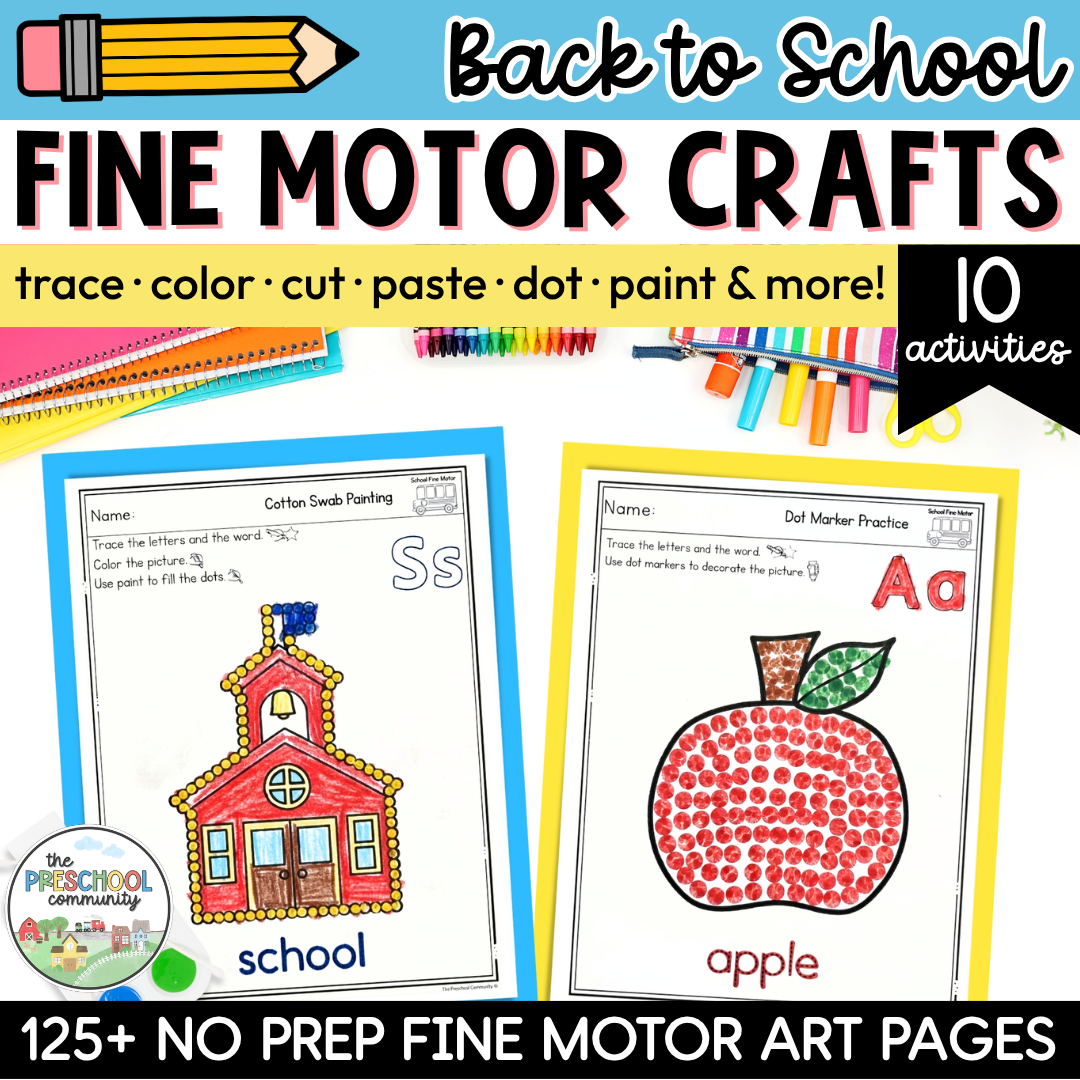
Start with basic lines (straight, zig-zags, curves, spirals) and gradually move into shapes, letters, and numbers. My Back to School Fine Motor Crafts pack includes ready-to-go pages that make this really easy to implement. Just choose the pages you like, print and go!
I like to add to the fun by printing them on colorful paper. Then, provide students with crayons, markers, or pencils to complete the page. For very young students, have them “trace” the lines with a finger first to practice going slowly down the line.
Use the pages during morning work, small groups, or send them home as simple practice pages. Slip them into page protectors and add dry-erase markers for a reusable center that kids love!
3. Add Tweezers and Pom-Poms to Your Centers
Tweezer work is fantastic for building the pincer grasp (thumb and forefinger) that students need to hold a pencil or use scissors.
How to Use It:
Provide child-safe tweezers and a container of small objects like pom-poms, mini erasers, or cut-up straws. Give students muffin tins or ice cube trays to sort items by color, shape, or size. They will carefully use the tweezers to pick up the item and drop it in the correct spot.
Keep this center rotating by switching out the manipulatives each week!
4. Let Students Build Pictures and Letters with Stickers
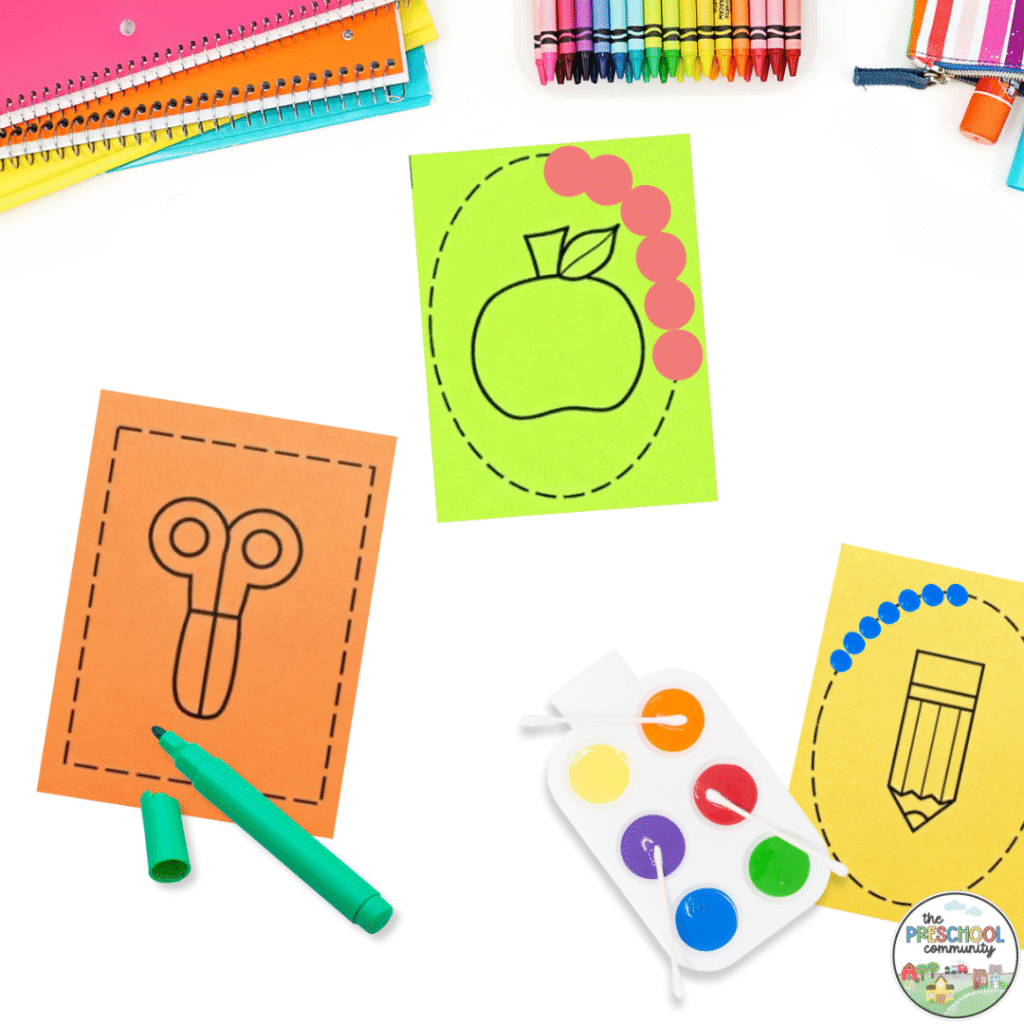
Peeling stickers may seem simple, but it requires precision and patience, and it’s a big workout for fine motor muscles!
How to Use It:
Give students paper squares with basic shapes or letters lightly drawn in pencil and let them match up the lines with small circle stickers.
If you’re looking for a done-for-you option, my Back to School Fine Motor Crafts features task cards that feature ovals and rectangles.
These are great for sticker work, but can also be used for cotton swab painting, tracing, and even cutting!
You’ll just print the pages, cut apart the task cards, and allow students to get to work with the material of your choice.
This activity makes a great early finisher or calming morning task!
5. Set Up Lacing and Beading Stations
Threading small items like beads onto pipe cleaners or yarn improves fine motor control, bilateral coordination, and concentration.
How to Use It:
Use pony beads, large buttons, or wooden shapes with shoelaces or plastic laces. You can also offer seasonal lacing cards or alphabet beads for added literacy practice. I like switching out the type of activity available to match the season.
Lacing trays make great quiet time or early finisher options! I also love them for morning work. Just be sure to explain the expectations with the laces before beginning!
5. Start Scissor Practice with “Snipping” Activities
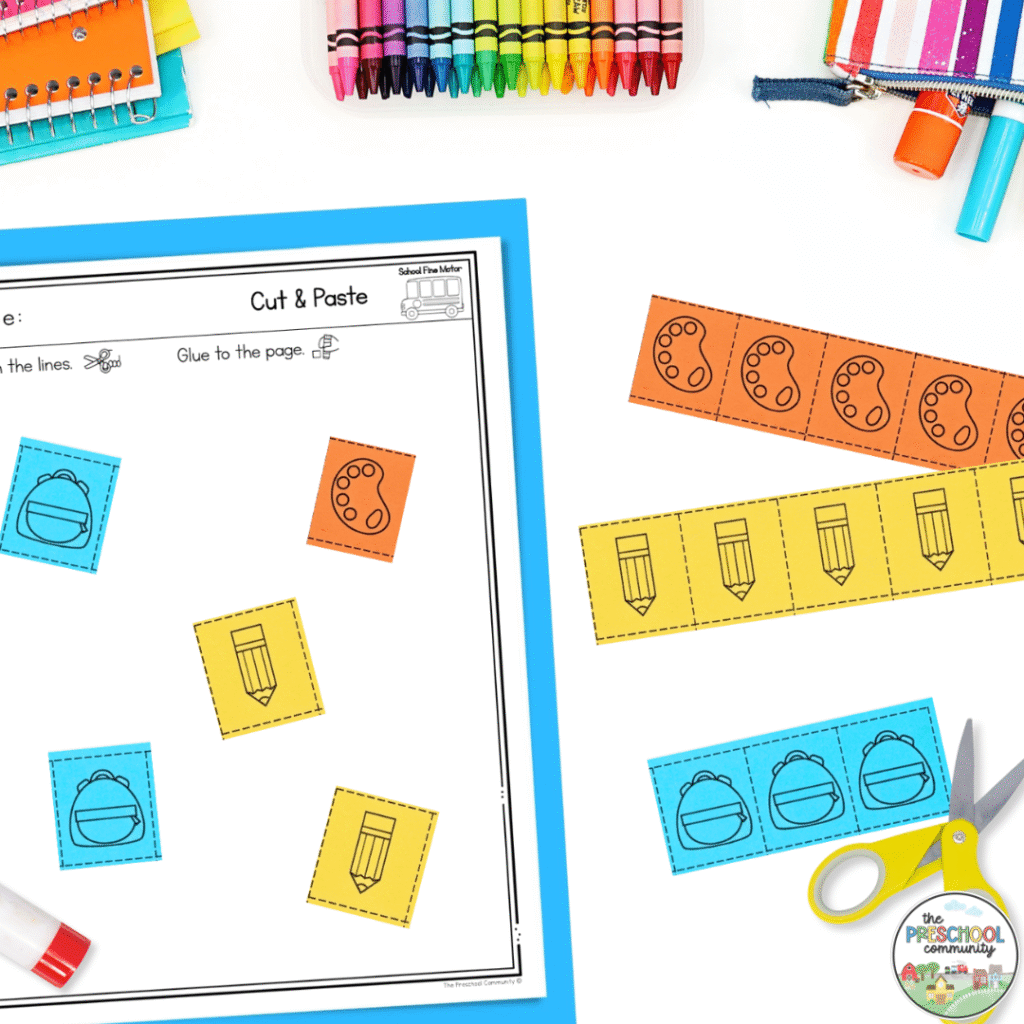
Scissor skills can be tricky to master, especially for students who are just beginning to build coordination between both hands.
How to Use It:
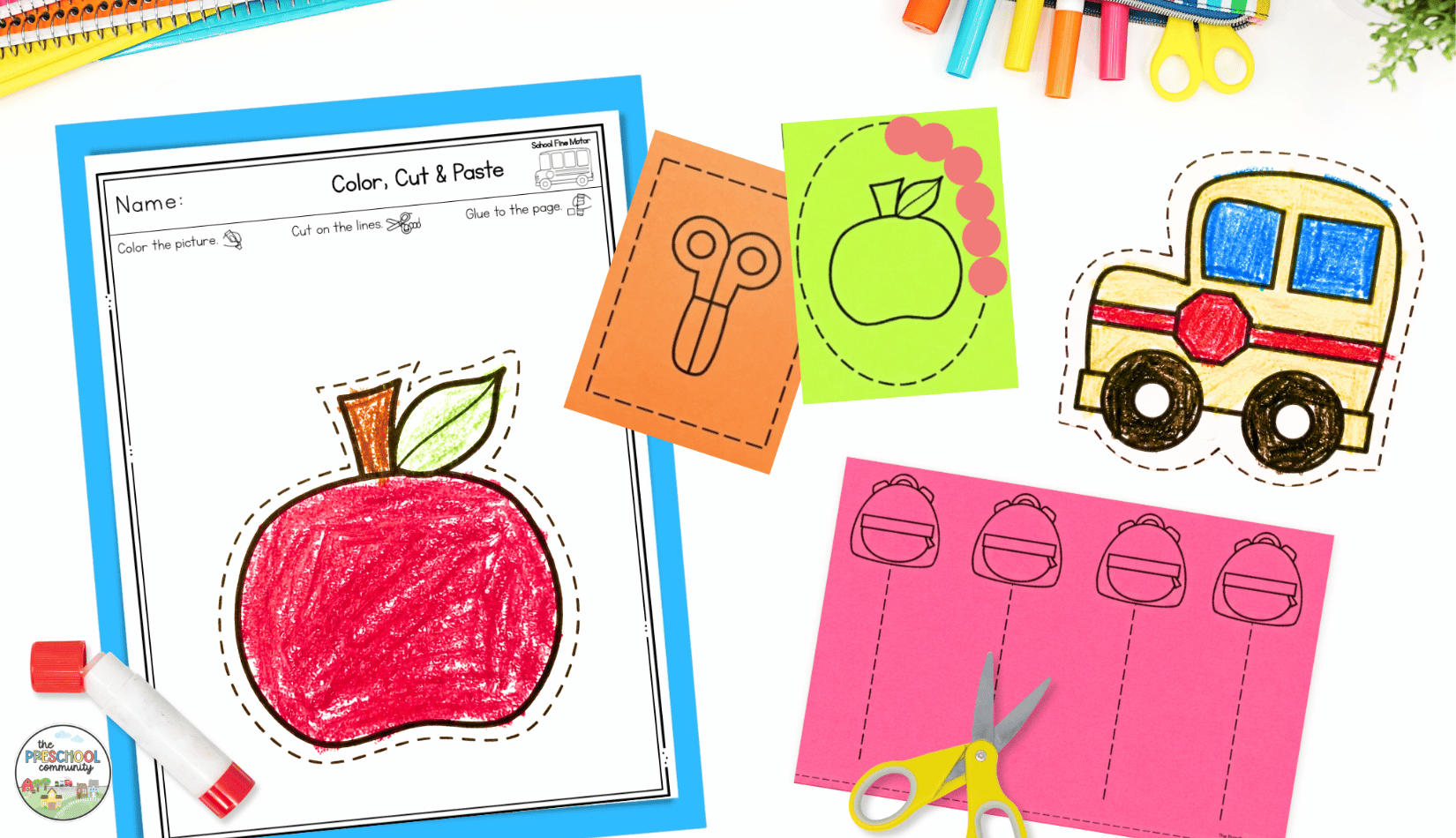
Begin with short, thick paper strips that allow students to practice small snips. Gradually move into cutting straight lines, curves, and eventually shapes.
In my Back to School fine motor pack, I have options for snipping strips of paper, straight lines, ovals and rectangles, as well as fun shapes like a school bus and an apple.
My students love moving from the more basic tasks to the advanced ones as their skills improve.
To make scissor skills part of your weekly routine, consider keeping a cutting tray available with pre-cut strips, magazine pages, or printable lines. Model proper grip often, and consider adding fun cutting challenges with seasonal pictures.
6. Introduce Hole Punch Shapes
Using a hole punch takes serious grip strength, and students love the satisfying “punch” sound!
How to Use It:
Provide paper strips or large shape outlines and have students punch along the edges. Try shapes like hearts, stars, or letters, and use the leftover confetti for art projects or sensory bins. These kid-friendly hole punches are my favorite because they are a bit easier to use!
7. Offer Q-Tip Painting for Control and Focus
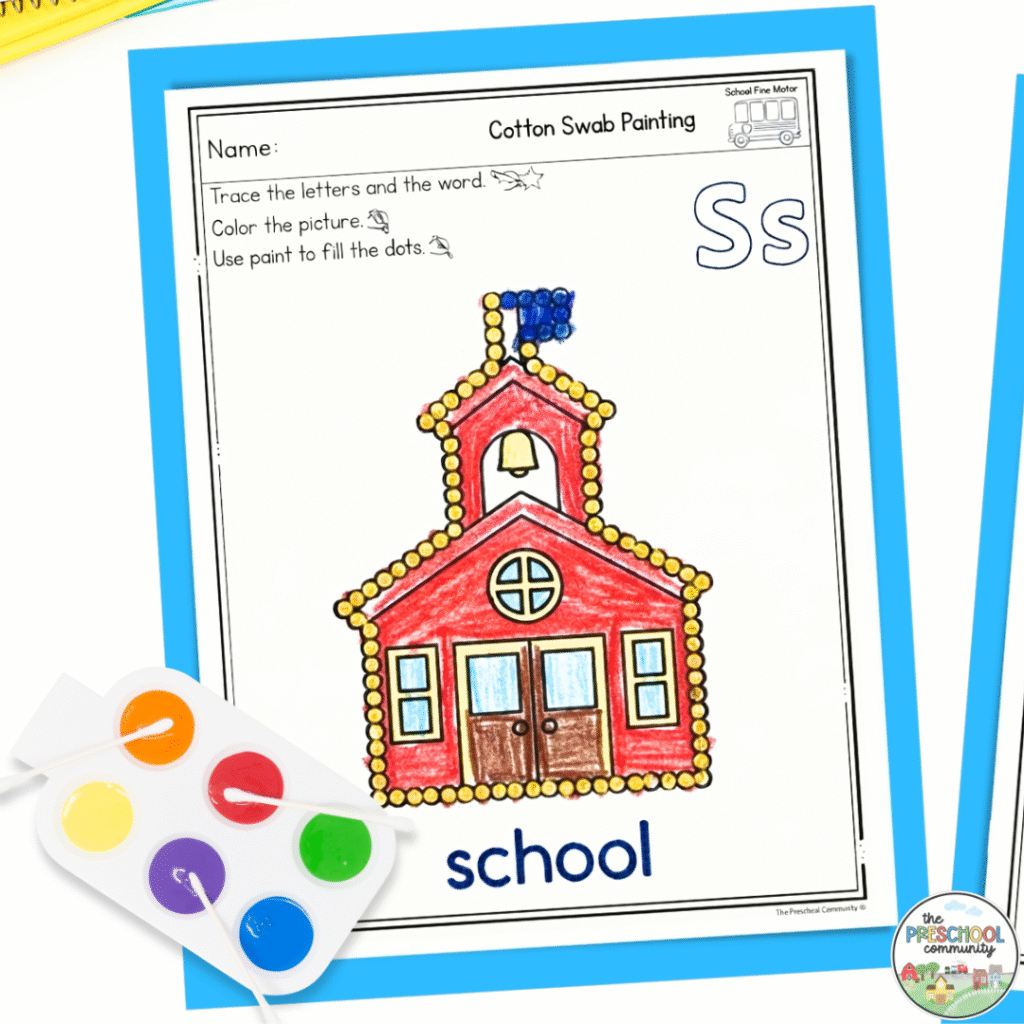
Painting with Q-tips or cotton swabs strengthens hand muscles while helping students build control and precision.
How to Use It:
Provide Q-tips and washable paint for students to dot along outlines of letters, shapes, or themed images. You can draw simple outlines on paper or use printable templates. Encourage students to dip gently and keep their dots close together for neatness. This activity is also great for calming down after active play or transitions.
If you’re looking for an easy way to incorporate this activity into your lesson plan, be sure to check out the activities in my Back to School Fine Motor Crafts. This resource includes 7 different Q-tip or cotton swab painting pages to choose from.
Students will first color the picture with crayons and then carefully use a cotton swab and paint to dab the dots along the edges of the picture.
These pages are perfect for your art center station, a quiet afternoon activity, or a low-stress assignment for a sub to facilitate.
9. Build with Small Bricks or Snap Cubes
Manipulating small building toys like Unifix cubes or interlocking blocks challenges students to use precise movements and problem-solving skills, all while boosting fine motor development.
How to Use It:
Set up a building center using snap cubes and task cards for guided exploration. Students will build school-themed objects like a pencil, crayon, bus, or glue stick using snap cubes. Each mat encourages visual perception, spatial reasoning, and careful hand coordination.
You can print the mats in color and laminate them for durability, or slide them into page protectors in a binder or bin. These make a fantastic addition to morning tubs, fine motor rotations, or your STEM corner.
10. Try Paper Tearing Art
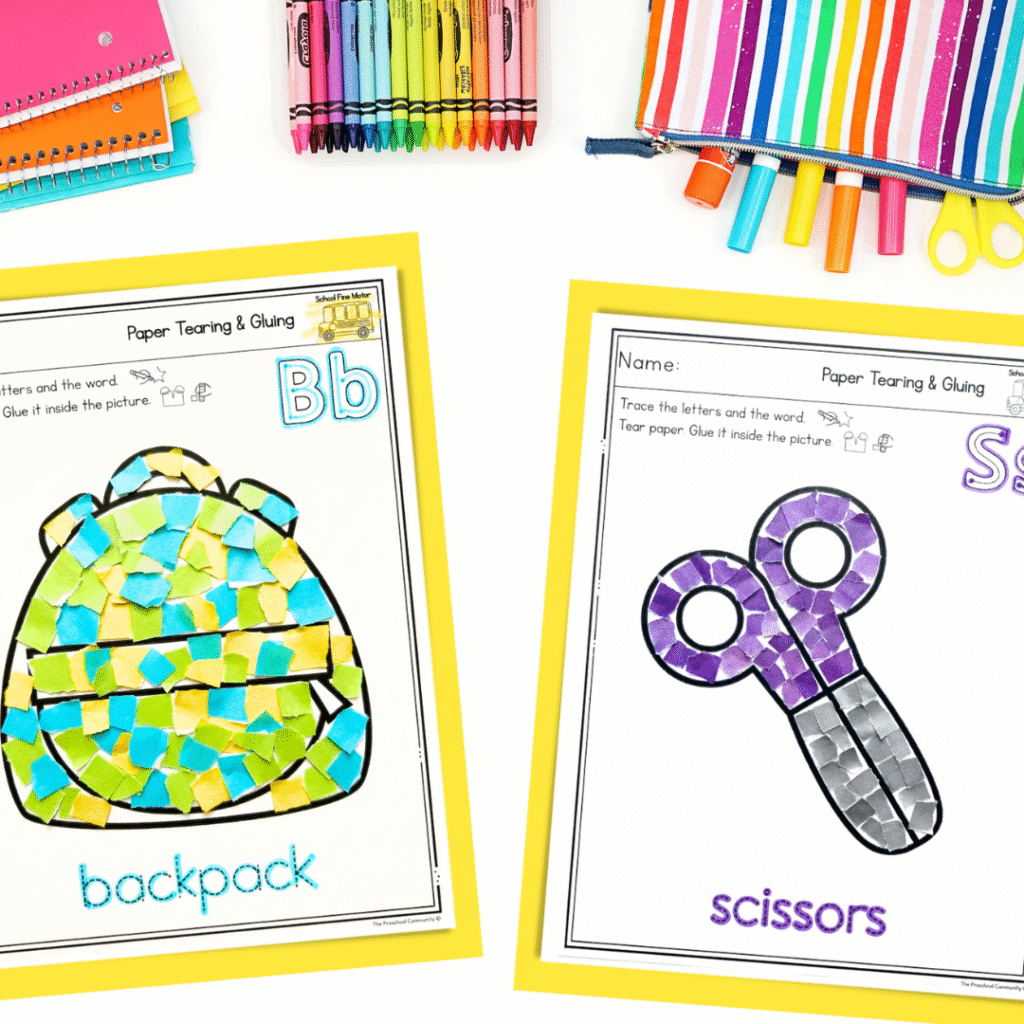
Paper tearing and gluing is one of my favorite activities to target fine motor skills. As a bonus, it lends an opportunity to teach your students how to use school supplies, like glue!
How to Use It:
Grab some pages that feature pictures to go along with your theme. I use the ones in this Back to School Fine Motor Craft pack at the beginning of the year.
Students will tear small pieces of colorful paper or tissue paper and glue them to the picture.
As a bonus, you can also use these pages with dot markers and other art supplies like oil pastels, watercolor, or even fingerpaint. No matter what you choose, these pages will be a hit!
Grab a Freebie to Get Started
If you’d like to try out some of the fine motor crafts and activities in your room, you’re in luck! I have an exclusive freebie back just for you! Inside, you will get 5 different activities that will make fine motor practice fun. You will receive line tracing pages, vocabulary tracing cards, line cutting pages, a dot marker page, and a paper tearing craft.
Enter your email above to grab your freebie and test out some of these activities in your classroom!
Make Fine Motor Practice Fun and Stress-Free
Fine motor development doesn’t have to be complicated or time-consuming. By weaving in playful, purposeful activities like tracing, lacing, and building, you’ll help your students develop the coordination and confidence they need for handwriting and beyond.
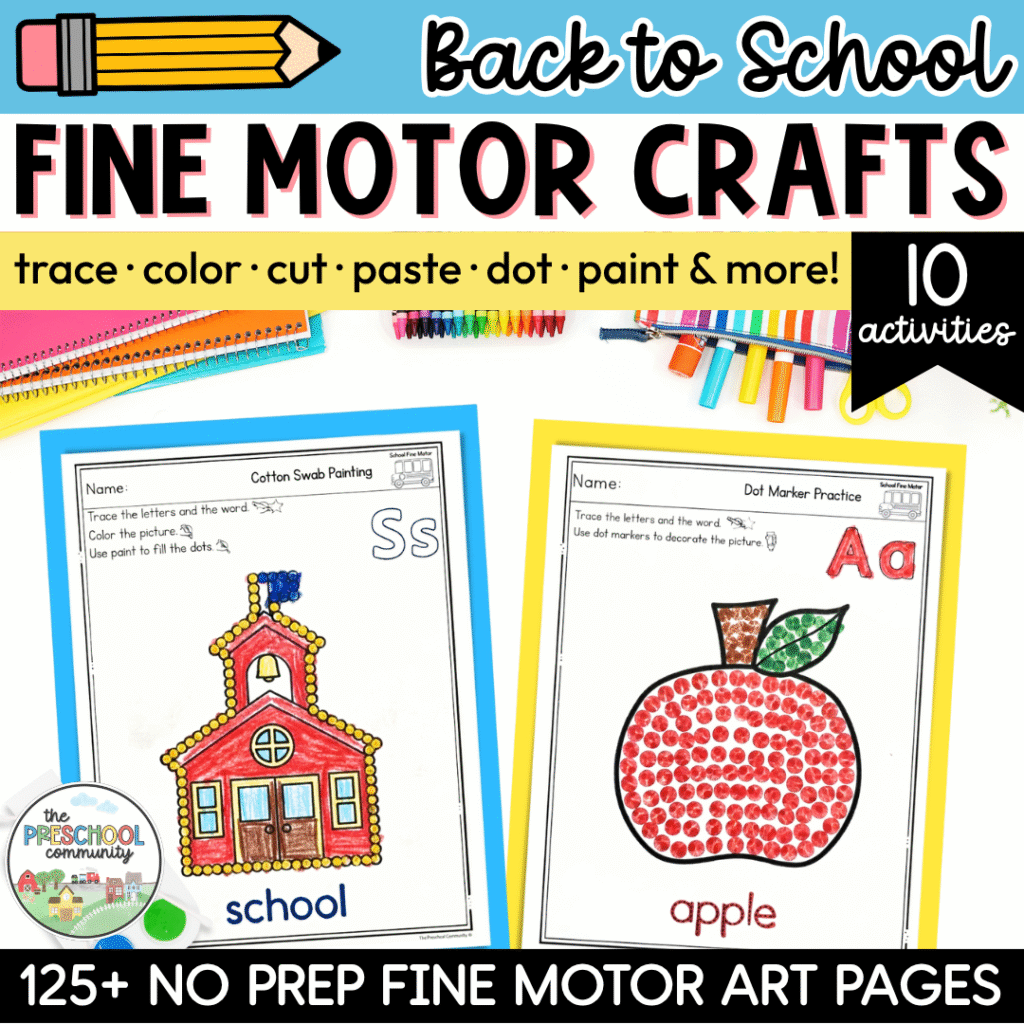
If you’re ready to make this easier than ever, be sure to check out my full Back to School Fine Motor Crafts resource! Inside, you get over 125 pages and 10 different activities including:
- Tracing Lines
- Tracing Vocabulary Words
- Trace & Color the Picture
- Straight Line Cutting Practice
- Cut and Paste Pages
- Color, Cut & Paste Pages
- Fine Motor Task Cards (can be used 4 ways)
- Cotton Swab Painting Pages
- Dot Marker Shape Pages
- Seasonal Pictures Art Pages (use with dot markers, paper tearing, stickers, watercolor, oil pastels, and more!)
This low-prep resource will make it simple and easy to make fine motor skills practice part of your daily routine. The pages can be used for morning work, centers, small groups, and so much more!
Incorporate Fine Motor Skills Into Your Routine
Start small, keep it fun, and remember, consistency is key. Fine motor skills aren’t built overnight, but with playful, purposeful activities woven into your daily routine, you’ll be amazed at how much progress your students can make in just a few weeks.
Whether they’re rolling playdough, tracing shapes, or building a crayon out of snap cubes, every squeeze, snip, and stroke is helping them get one step closer to writing their name, cutting with confidence, and managing classroom tools independently.
The best part? Fine motor practice doesn’t need to feel like “one more thing.” With the right resources and a few easy-to-prep centers, it can become one of the most engaging parts of your day. Let it be fun, let it be hands-on, and let it support the skills your students will use all year long.
Save This Post
Make sure to pin this post on Pinterest so that when you’re ready to start planning your own fine motor activities, you’ll have everything you need in one place!