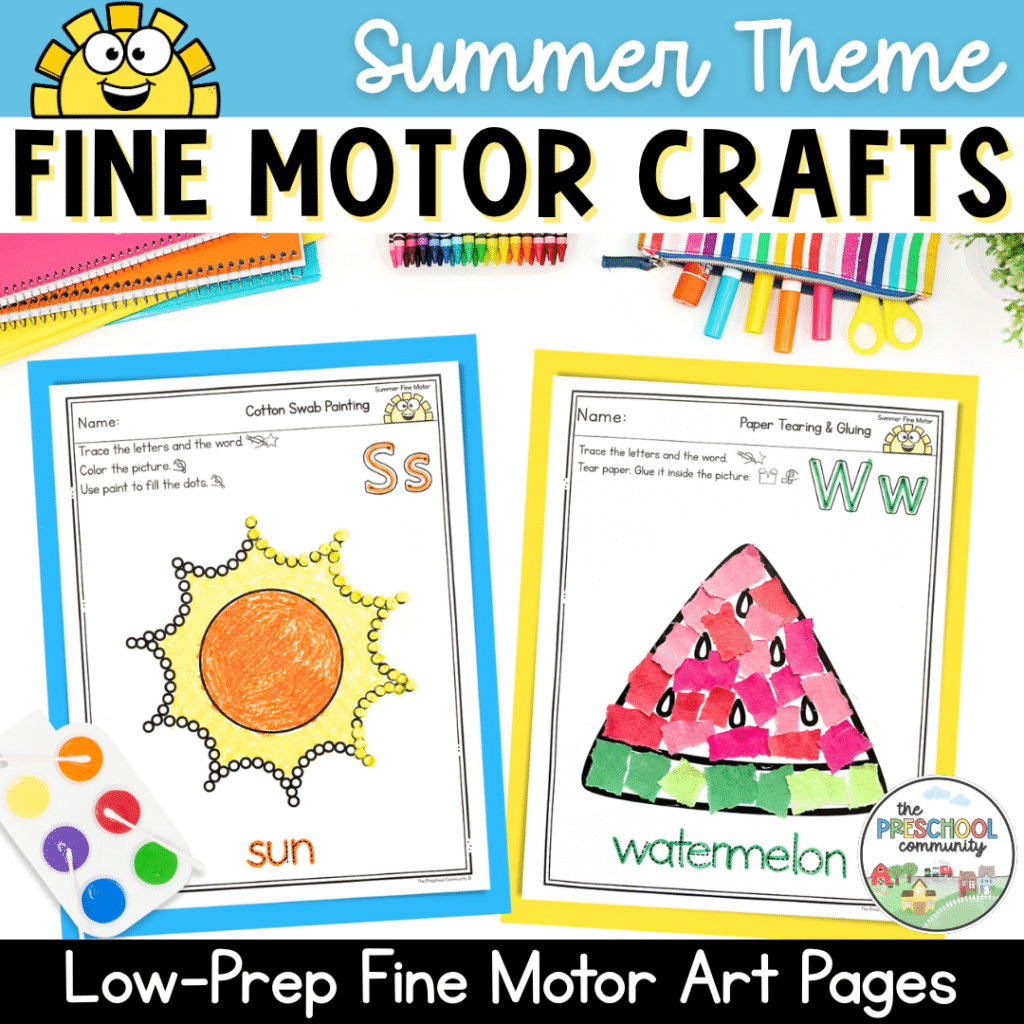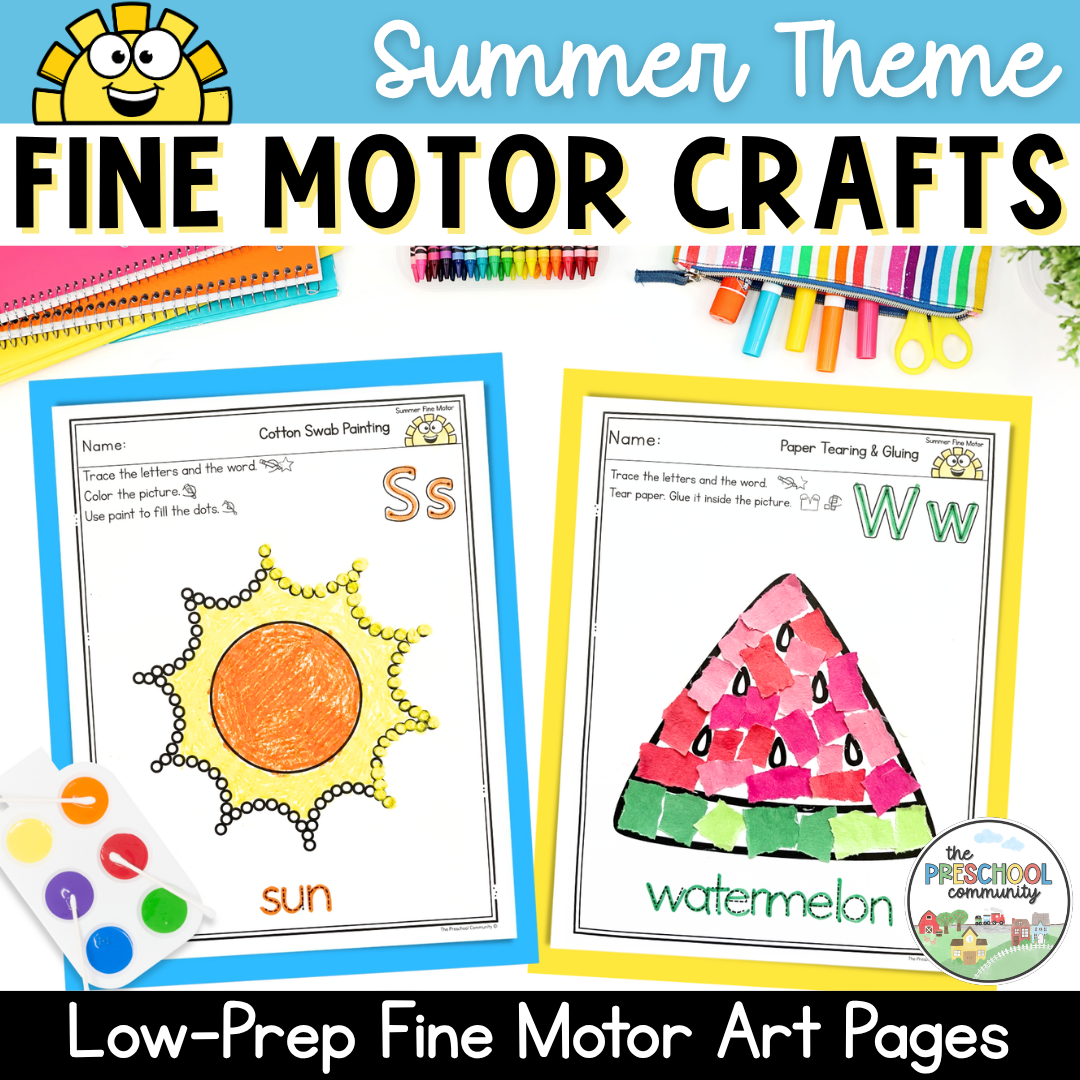






If you teach preschool, pre-k, kindergarten, or support homeschool or summer programs, you already know something important… Fine motor skills do not take the summer off. In fact, this is one of the most important times of year to keep them going in simple, low-pressure ways that still feel fun for kids. But, we’re also low on time, right?! We don’t exactly have the capacity for tons of prep. That’s exactly why I created this Summer Fine Motor Crafts and Art Worksheets Pack! It gives you everything ready to go without extra planning, but plenty of summer fun!
Why Summer Fine Motor Practice Matters So Much
Fine motor skills support nearly every early learning task young students complete during the day. From writing to cutting to coloring, these small movements build the foundation for classroom independence.
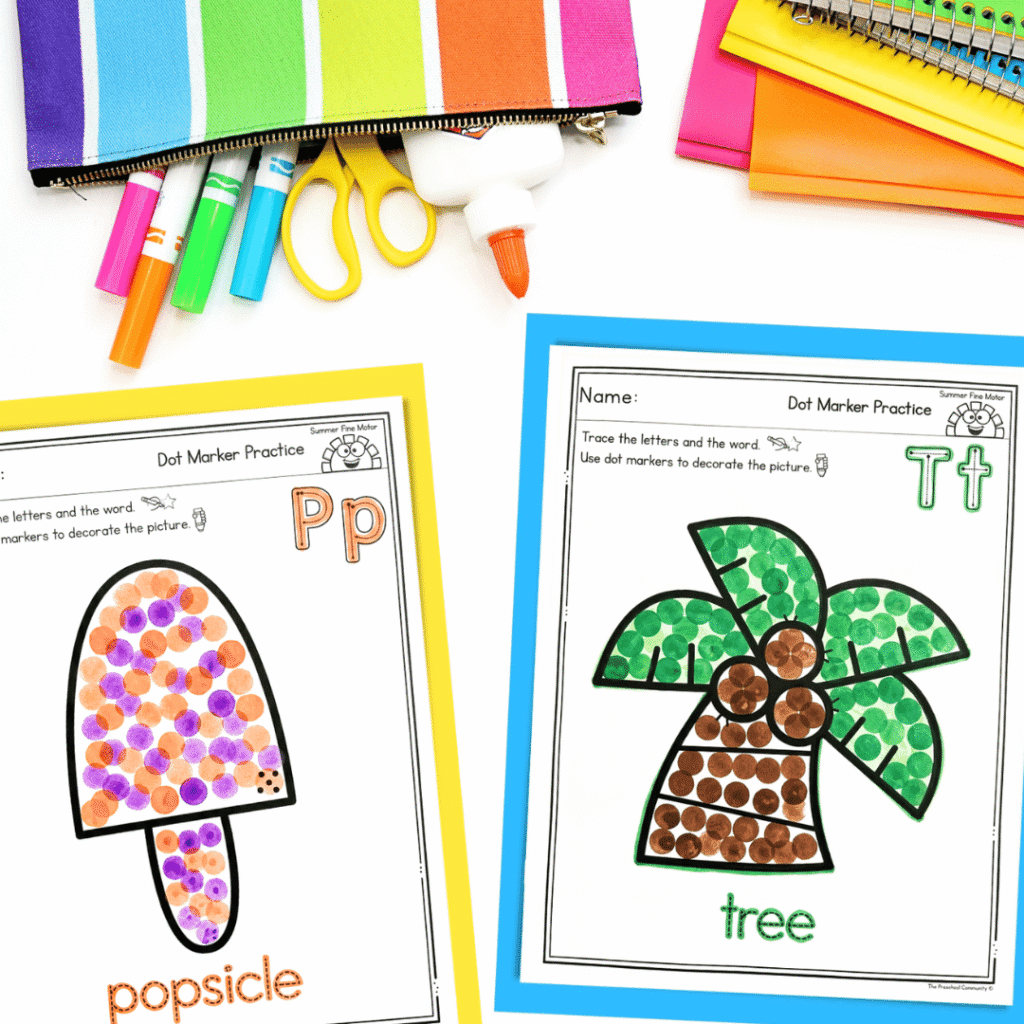
Young learners use fine motor skills when they:
- Hold and control a pencil
- Cut with scissors
- Trace shapes and letters
- Color with control
- Complete hands-on crafts
- Build hand strength and coordination
Without continued practice, students can lose confidence or need extra time to rebuild skills in the fall. The goal is not formal instruction over summer, but simple, consistent practice that feels playful and stress-free.
That is why every activity in this pack is designed to feel like an art project, or a craft, not a worksheet! Students will love completing these pages, and you’ll love that they’re low-prep and target additional learning skills like letters, shapes, vocabulary, and more.
Ready to see all 10 summer fine motor activities and how we use them? Let’s dive in!
1. Strengthen Pre-Writing Skills with Line Tracing Pages
Before students can confidently form letters, they need consistent practice controlling basic strokes.
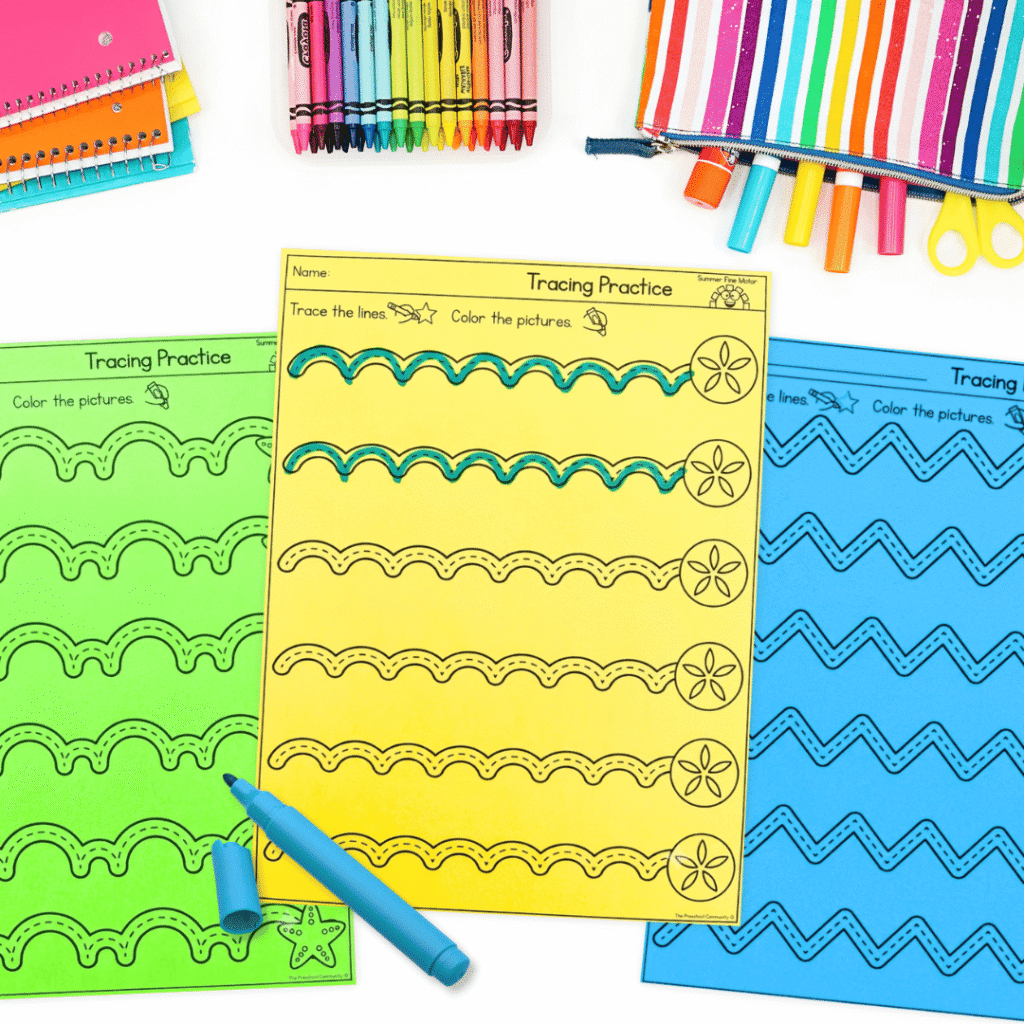
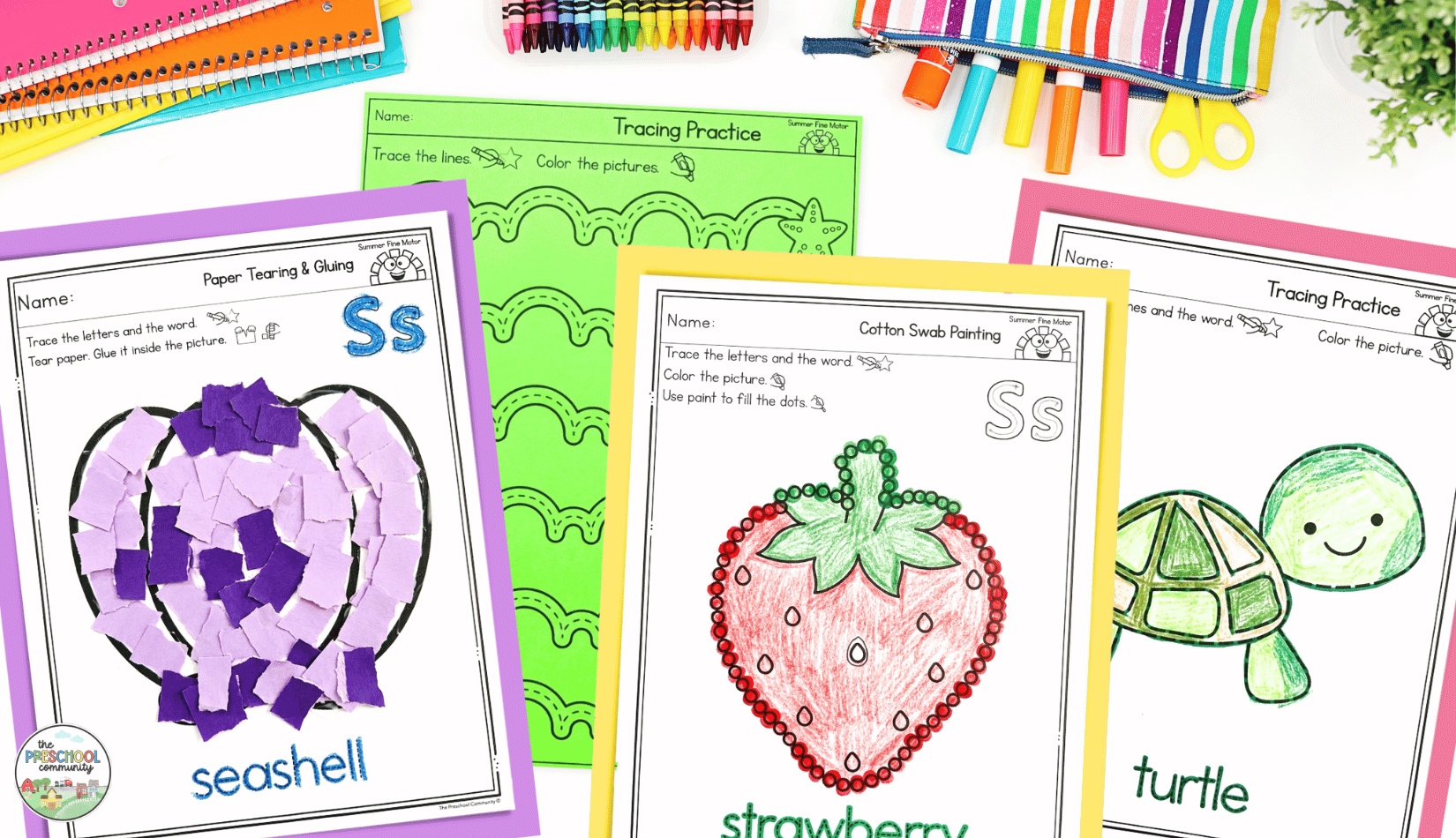
These line tracing pages help students build control with straight lines, curved lines, directional movement, pencil grip, and hand-eye coordination.
How to use them:
Place them at a morning work table or independent center and model just the first line together. After that, students can complete the page on their own while you work with small groups. Many teachers also pair tracing with coloring to extend engagement and encourage careful pencil control.
These pages also work well in summer packets because they require very little instruction from adults.
2. Build Vocabulary and Writing Skills with Tracing Cards
Vocabulary tracing cards are a simple way to blend early literacy with fine motor practice. Students trace summer words, color words, and shape words while building pencil control and early reading exposure at the same time.
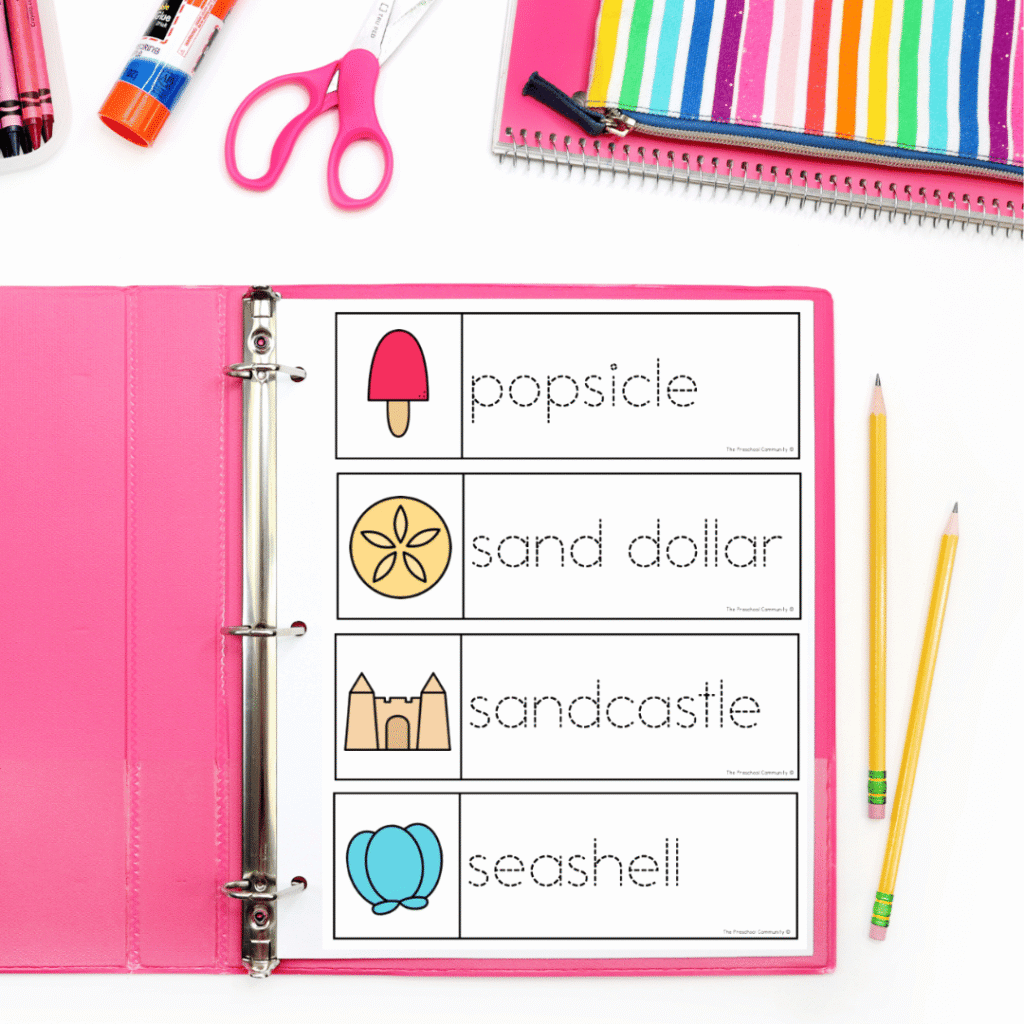
How to use them in your classroom or home:
Start by introducing 3 to 5 cards at a time. Model how students should trace slowly and carefully, then let them rotate through the cards independently in a literacy center. If students finish early, they can re-trace the words or say the word aloud to reinforce vocabulary.
For extra durability, laminate the cards and store them with dry erase markers so they can be reused all summer long.
If you prefer, you can also place the full sheets in plastic page protectors and add them to a binder. Then, students can use dry-erase markers to trace each word. This option is even less prep and leaves you with a fun tracing binder that is easy to use.
3. Sea Creature Tracing Pages for Extra Engagement
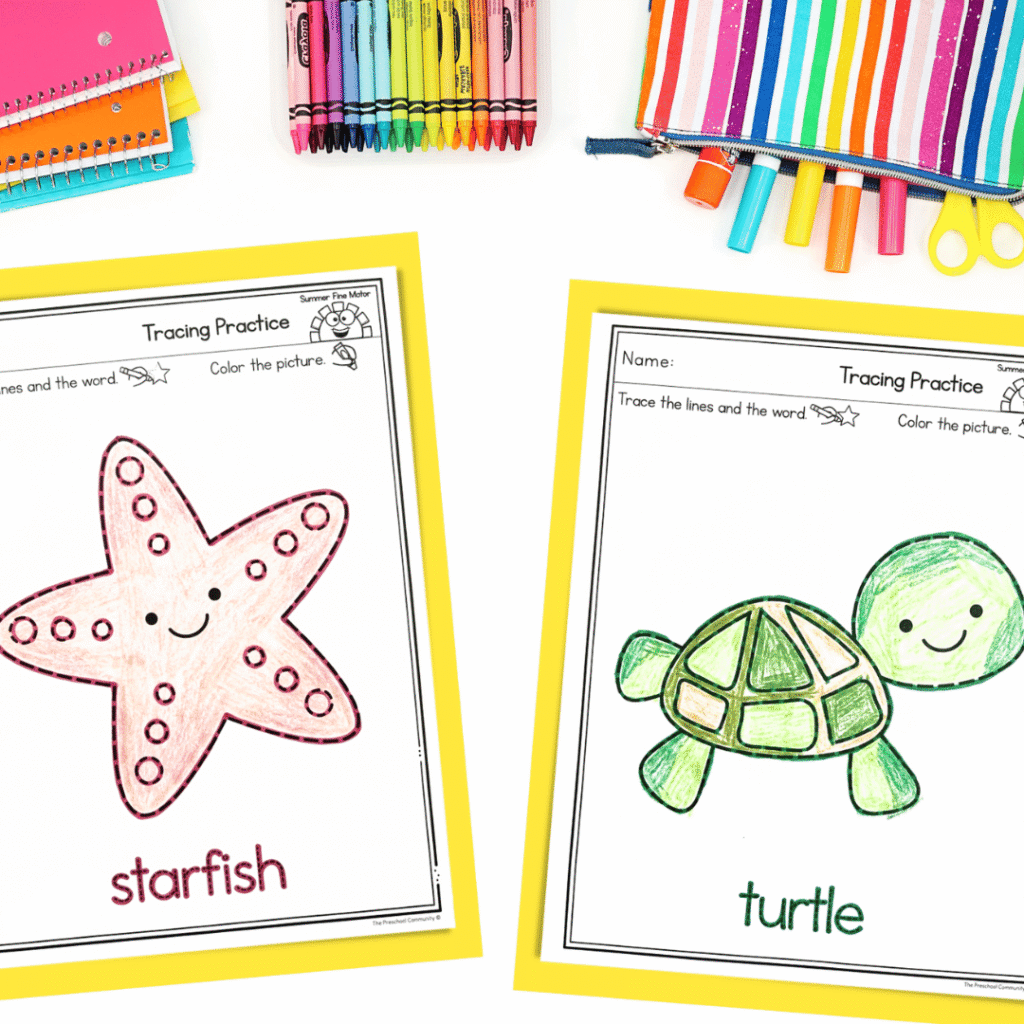
These pages take foundational tracing skills and combine them with engaging ocean-themed visuals.
Students trace and color sea animals like turtles, sharks, and fish while also tracing the names of each creature.
Classroom use idea:
Use these during small group instruction by modeling how to trace one animal together before students complete their own page. Then place the remaining pages in a center so students can revisit them independently throughout the week.
If students create more than one page, you can even bind them together into a sea creature book to take home.
This structure works especially well during summer themes when attention spans can be a little shorter.
4. Practice Cutting Straight Lines
Scissor skills can often be the trickiest for young students. These straight-line cutting practice pages offer a fun way to practice.
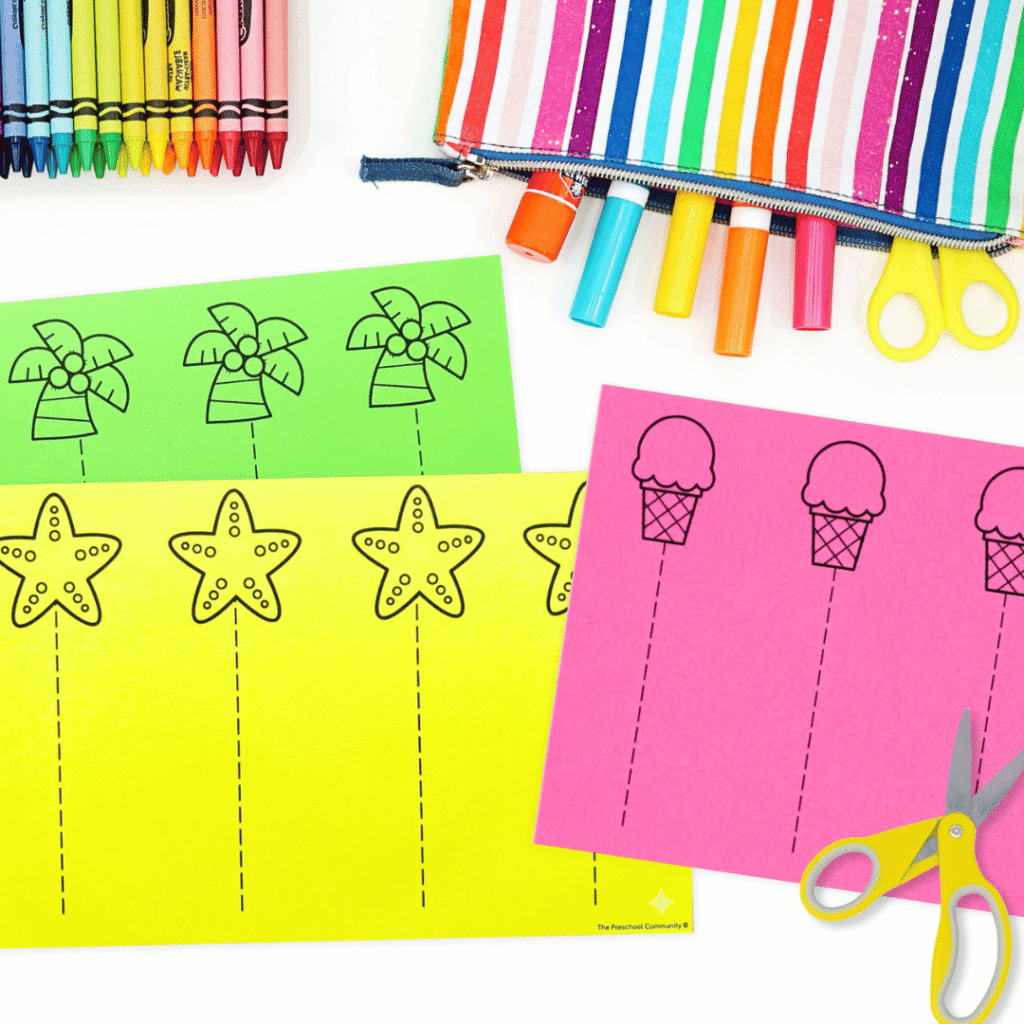
To use, simply print the pages and cut on the middle line to create 2 pieces per page. Students will then use scissors to cut up the straight line until they reach the picture.
This requires careful focus and control to stop before cutting the picture. If you want to extend learning a bit, try coloring the pictures first and then cutting.
More ways to use:
These pages can also be used for additional tracing practice, or with small stickers or cotton swabs. Simply have students apply stickers or dot with paint up the line for a fresh new activity option.
5. Cut and Paste Pages
Scissor skills require repetition, structure, and confidence building, especially at the end of the year.
This activity provides all three.
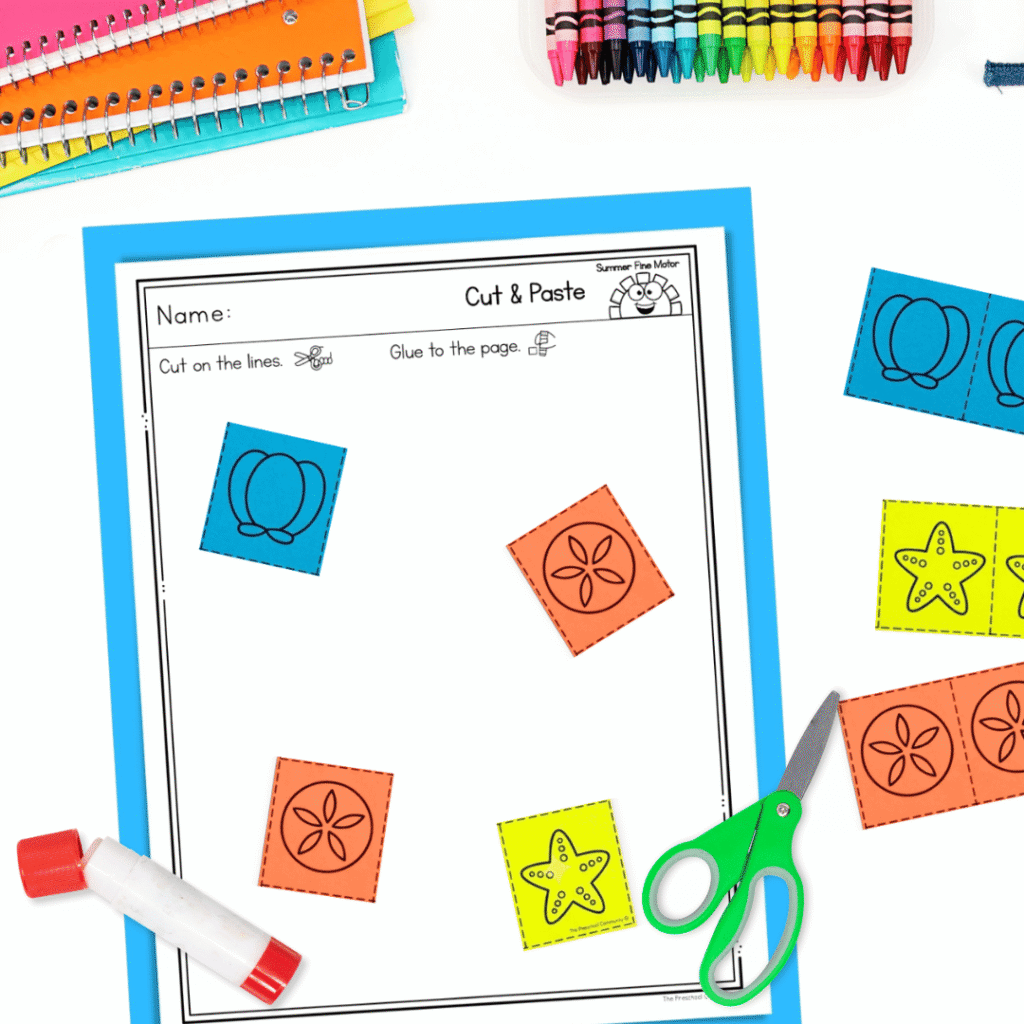
Students cut small shapes from strips and glue them onto a matching page, practicing controlled snipping in a meaningful way.
Teacher tip:
Introduce this activity by modeling how to hold scissors and cut along one strip together as a group. Then give students one strip at a time so they can focus on control without feeling overwhelmed.
I also like to print the cutting strips on colored paper to bring a little extra fun into the mix.
This is one of those activities that works beautifully in both centers and small groups because it naturally builds independence over time.
6. Color, Cut, and Paste Summer Fine Motor Crafts
This activity steps up the last one for continued practice. Instead of just cutting on a straight line, students will cut on curved lines to cut out a picture. For your students who need more challenge, this is a great option!
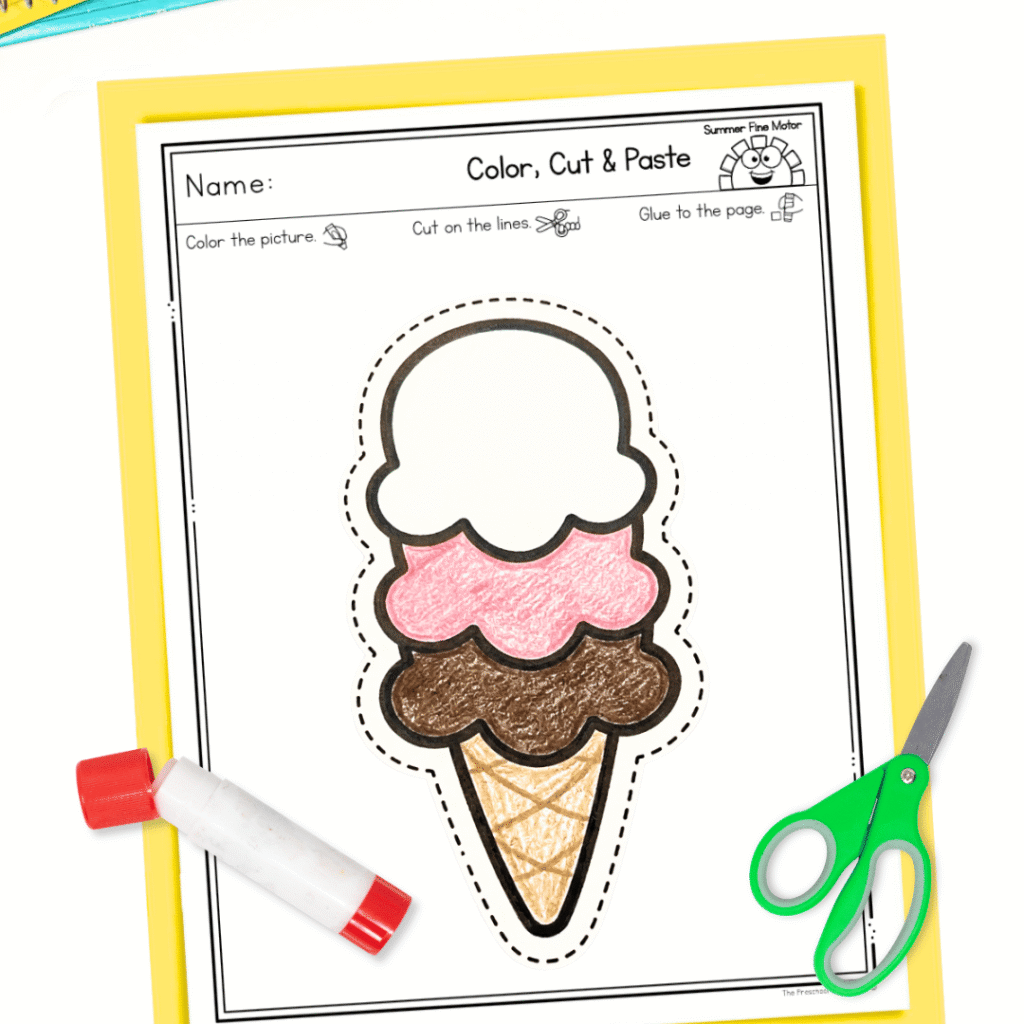
To use, students will first color a summer picture. There are 5 different options included, such as a shark, an ice cream cone, a sun, and more. After coloring, they will carefully use scissors to cut the picture out. Finally, they glue the picture to the page.
Teacher tip:
I like to save these summer fine motor crafts for the end of the week or the end of the day. Both of these times tend to be restless in the classroom, and this 3-step process is just what students need to reel in their focus again. Plus, it feels way more fun than any regular worksheet ever could!
7. Summer Fine Motor Task Cards
This activity is awesome because it can be used in 4 different ways, depending on what skills you would like to target. I love activities that can be reused while still feeling fresh, and this one certainly hits the mark!
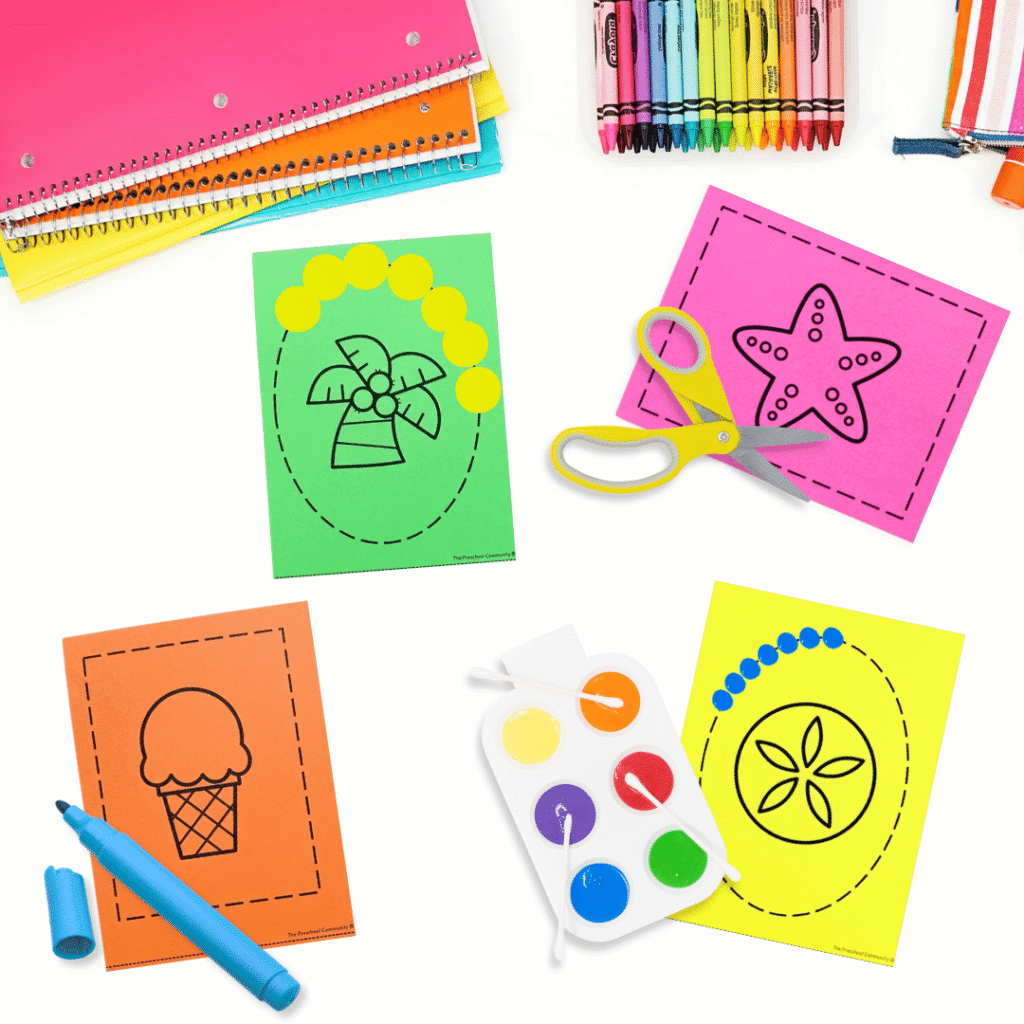
To use, you will cut on the grid lines to create 4 task cards per page. Then, have students complete the activity by choosing one of the 4 options:
- tracing with markers or crayons
- cutting with scissors
- cotton swab painting
- using stickers
No matter what you choose, students can begin by coloring the summer picture in the center and then trace, cut, dot, or sticker the lines. You can even set up 4 stations with each option and allow students to move through each one.
8. Cotton Swab Painting for Fine Motor Strength
Cotton swab painting is a favorite because it feels like art, but it quietly strengthens fine motor control. And as a teacher, I love it because it gives the kids a creative outlet, but it’s a very easy art project to manage and control with minimal mess.
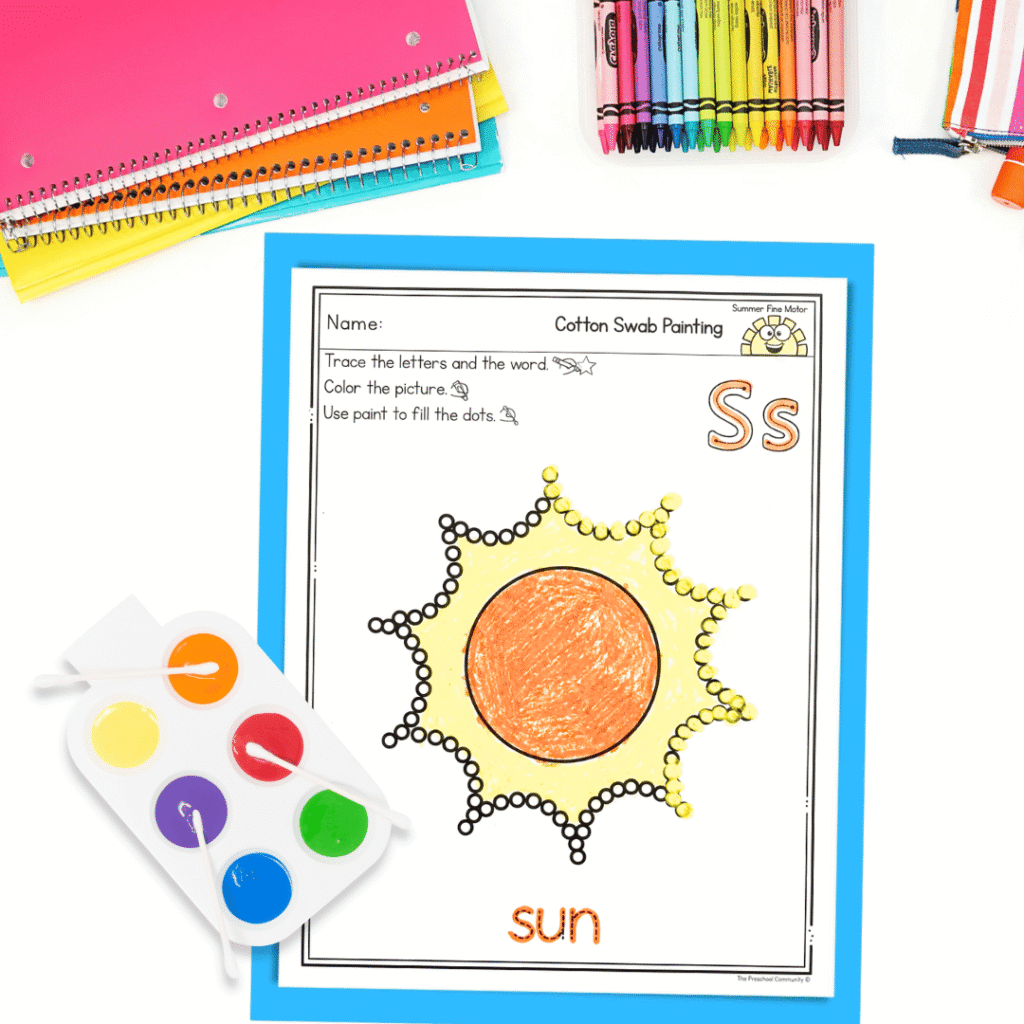
To complete this activity, students trace letters and words, color the picture, and then use cotton swabs to fill dotted outlines. There are 12 different summer pictures included, so plenty to choose from!
How to run it:
Set this up as an art center where you first demonstrate how to use the cotton swab gently to fill small spaces. Then allow students to complete their own designs independently or in pairs.
Because it combines tracing, coloring, and painting, it keeps students engaged longer than a typical worksheet while still building important skills.
9. Dot Marker Shape Pages for Hands-On Learning
These pages are perfect for learners who need hands-on learning and visual engagement while practicing early math skills.
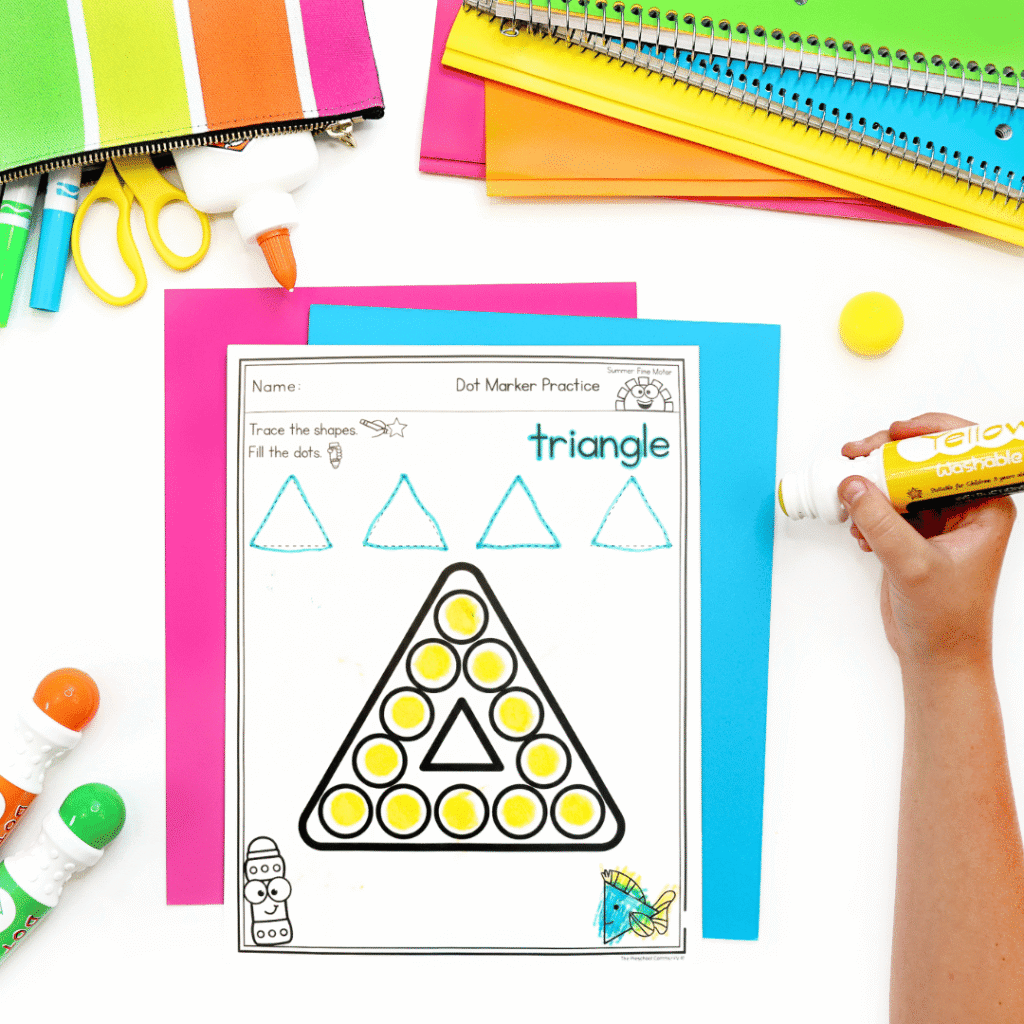
To use, students identify the shape, trace it, and then use dot markers to fill it in while connecting it to a themed fish character shape.
Easy setup idea:
Rotate these into morning tubs or early finisher bins with minimal explanation. Students quickly understand the routine after one modeled example and can work independently from there.
They are also great for review because students can revisit the same skill in a new format throughout the summer.
10. Seasonal Fine Motor Crafts for Creative Practice
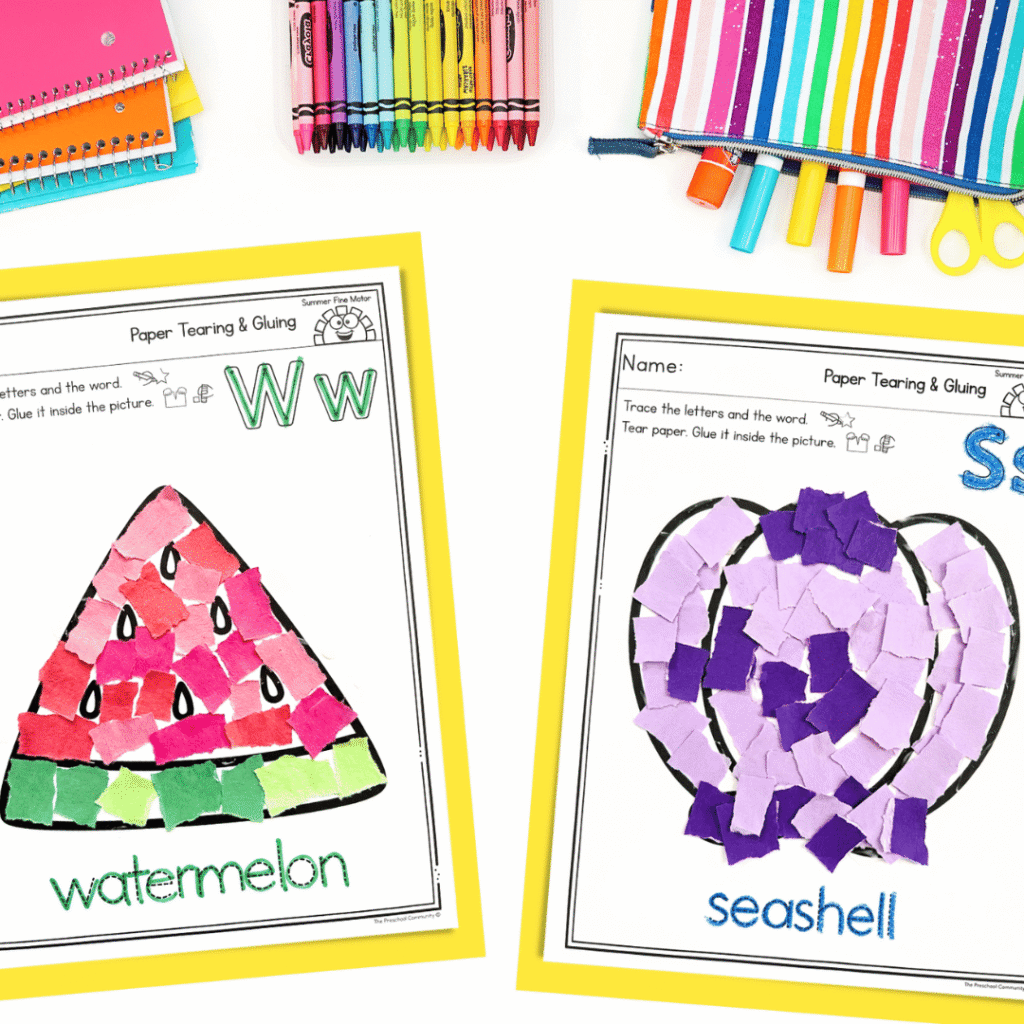
Last on this list is a fun summer fine motor activity that can also be used in many different ways! Students trace letters and words, and then fill summer-themed images like watermelon, starfish, and ice cream using the art material of your choice. Some great options include:
- crayons or markers
- oil pastels
- dot markers
- tissue paper
- watercolor
- paper tearing
- leftover art supplies and more!
Classroom flow tip:
Model how to fill the seasonal picture first, then let students complete the craft step by step. Many teachers use this in art centers or end-of-year craft days because it naturally slows students down and supports focus.
Finished projects also make great take-home pieces and bulletin board displays, which helps students feel proud of their work.
Easy Ways to Use These Summer Fine Motor Activities in Your Day
If you are wondering how to actually fit these into your routine, think of them as ready-made center activities that require very little explanation. In a classroom setting, many teachers set them up in three simple ways:
- Morning tubs for independent warm-up work
- Small group rotations for teacher-guided support
- Quiet table work during transitions or end-of-day routines
In homeschool or summer programs, one page a day works beautifully as a quick skill-building activity that does not feel overwhelming.
This is also where the full Summer Fine Motor Crafts and Art Worksheets Pack becomes especially helpful. Instead of planning individual activities, you can simply choose a page and know it already supports fine motor development, literacy, or early math skills.
A Simple Way to Keep Skills Going All Summer
If you are looking for a done-for-you way to keep fine motor practice going all summer, the Summer Fine Motor Crafts Pack gives you everything in one place.
Instead of planning individual activities, you can simply open the resource and choose a page that targets the exact skill your students need that day. Each activity is already designed for easy classroom or home use, which saves time during busy end-of-year weeks.
If you want a starting point, the free 4th of July fine motor activities are a great way to see how these types of hands-on tasks work in real classrooms.
Ready to simplify your summer planning?
Grab the Summer Fine Motor Crafts Pack and have a full set of engaging, low-prep activities ready whenever you need them. Your students stay busy building real skills, and you get one less thing to plan during an already full season.